Master’s in Electrical and Computer Engineering Programs
A master’s in electrical and computer engineering from Duke is your gateway to building the AI-driven systems, next-generation computing platforms and digital infrastructure of tomorrow. Launch your career in a cutting-edge field that tackles the newest challenges in AI, software and hardware systems, next-generation computing and security.
Specialized technical education for students interested in leadership roles in industry
Why Pursue a Master’s in Electrical and Computer Engineering at Duke?
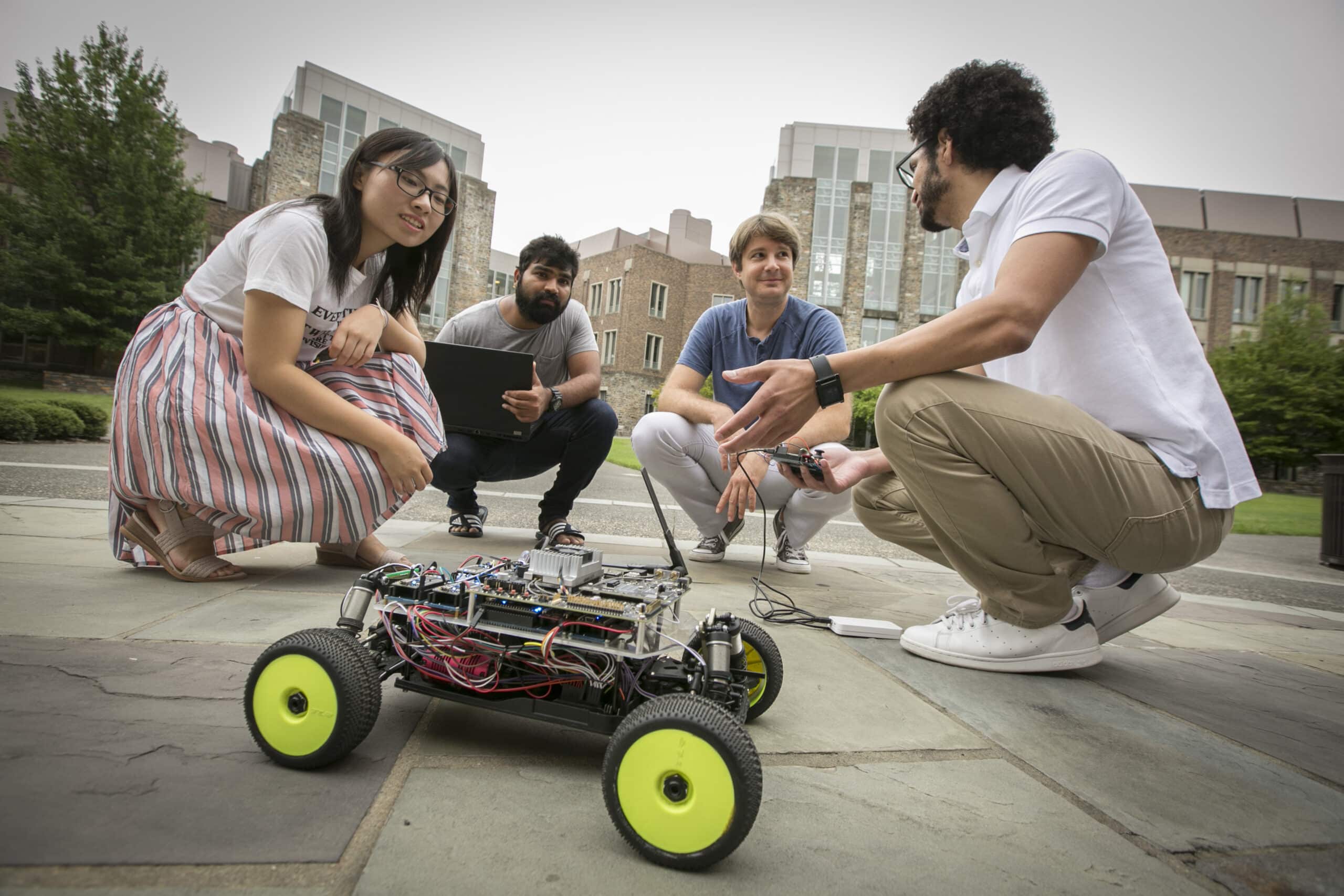
With a master’s in electrical and computer engineering (ECE) at Duke, you can immediately apply what you learn. You’ll have the opportunity to engage in research labs, work with industry partners, join startup incubators and tackle interdisciplinary challenges relevant to real-world systems. You graduate prepared for leadership roles in high-growth fields and competitive Ph.D. programs.
What’s the Difference Between an M.S. in ECE & an MEng in ECE?
While both programs deliver a rigorous master’s in electrical and computer engineering education, each one serves a different purpose. Here’s a snapshot of your master’s in computer engineering degree options:
Focus: Industry focused with management components, leadership oriented
Capstone: Thesis or project with faculty or industry mentorship
Capstone: Industry internship and applied project
Course Mix: Advanced ECE coursework and research seminars
Course Mix: ECE coursework plus business, management and product development
Typical Outcome: Research and development roles in industry, Ph.D. pathway, technical engineering positions
Typical Outcome: Engineering leadership, product design and systems engineering positions
The M.S. is a rigorous, deeply technical master’s in computer engineering that prepares you for research and development careers in industry, as well as Ph.D. programs. The MEng path offers both technical and leadership training with management components for a career in a high-demand field.
Choose to Specialize in High-Demand ECE Tracks
Duke’s master’s in electrical and computer engineering includes customizable tracks to reflect today’s most urgent technology needs. Whether you’re interested in a master’s in AI, software/hardware engineering or quantum technology, you can follow a preset path or blend courses based on your preferred focus area. Choose among these five tracks.
close up Artificial Intelligence technology city for backgroundsFuturistic eye, Artificial Intelligence, Globe – Navigational Equipment, DataBrain Wave, Artificial Intelligence, city.Data,Face recognition
Machine Learning & Artificial Intelligence Track
If you’re aiming for a master’s in AI, this track is an ideal fit. You’ll immerse yourself in deep learning, neural networks, statistical modeling and scalable data pipelines that drive cutting-edge automation and AI.
Programming code abstract technology background of software developer and Computer script
Software Engineering Track
Develop modern computing expertise through systems design, cloud-scale architecture, embedded software and secure development practices. You’ll build engineering-grade software used across tech, robotics and IoT environments.
Strengthen your foundation in circuits, microelectronics, digital systems and embedded hardware. You’ll explore VLSI, chip architecture and advanced device fabrication techniques.
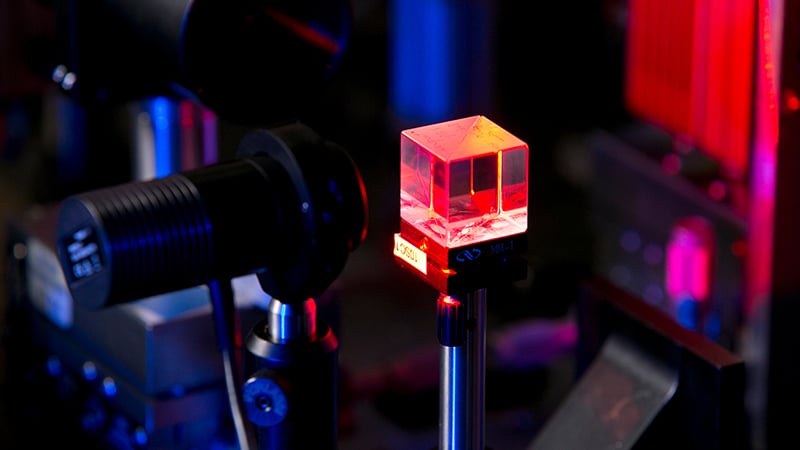
Student Andre Van Rynbach, in the Jungsang Kim photonics lab
Quantum Software & Hardware Track
Experiment with quantum algorithms, photonics, quantum error correction and next-gen computing materials. Duke’s renowned quantum research centers are the ideal setting for this interdisciplinary track.
Silicon wafer for manufacturing semiconductor of integrated circuit.
Semiconductor Technology Track
Train for careers shaping chip design and fabrication. You’ll study semiconductor physics, lithography, materials and integrated systems. This field is expanding rapidly due to global demand, making it a prime opportunity to put your master’s in computer engineering to work.
This master’s in electrical and computer engineering pathway prioritizes technical depth critical for research and industry roles, focusing on real-world problems. If you plan to pursue a Ph.D., this is the strongest preparation program Duke offers.
Here’s what to expect:
ECE coursework in AI, software and hardware engineering, systems for AI, quantum computing systems and semiconductors
Electives aligned with your track
Optional thesis grounded in faculty-led research
Opportunities to publish and present your work
Access to doctoral-level seminars and research clusters
Your MEng program will include both technical engineering depth with business and professional leadership courses. If your long-term career objectives include technical leadership roles, this is a great path.
It consists of:
Technical ECE coursework based on your track
Engineering management, product development and business fundamentals
Industry project mentored by faculty and corporate partners
Move From Problem to Prototype in a Supportive Environment
Earning your master’s in electrical and computer engineering at Duke means joining a community known for innovation, collaboration and student-centered mentorship. Benefits of becoming a member of Duke include the following:
Faculty recognized globally for breakthroughs in AI and systems for AI, quantum and next-generation computing and cybersecurity
A flexible curriculum that lets you pick your engineering pathway
Access to the Duke Pratt School of Engineering’s innovation ecosystem
A hands-on environment where staff invest in your short- and long-term growth
I wanted to work in applied quantum computing, and get into the industry as fast as possible. Duke had the most options, covering the breadth of quantum computing and opportunities to go deeper into the areas I wanted. Being in the same room as very dedicated and passionate people upgrades your experience. A high standard is set, and you get a lot of encouragement.
Duke offers four fundamentals of programming courses through the online Coursera platform. If you like these courses, you’ll love being a Duke master’s student.
You can choose from five tracks: Machine Learning & Artificial Intelligence, Software Engineering, Computer Hardware Engineering, Quantum Software & Hardware and Semiconductor Technology. Tracks are flexible so that you can explore different disciplines. Whether you’re interested in a master’s in AI or you hope to design the next generation of hardware platforms that keep the world moving, you can build it here
In the 2024 cohort, employers included Amazon, NVIDIA, Google, Samsung Electronics America, Salesforce, SpaceX and many more. Alumni found work as Software Engineer, AI Algorithm Engineer, Data Science Engineer, AI Web Developer, Lead Solution Engineer and additional roles. The average base salary was $113,500 across all industries.
Yes, both programs allow (and encourage!) you to participate in an internship if you choose to.
Take the Next Step Toward Your Master’s at Duke
Are you interested in pursuing a master’s in electrical and computer engineering at Duke? Explore our program tracks or apply now.