

Physics-Based Computation for State of the Art Edge Intelligence
Testing in Chen’s lab at Duke shows an AI model that can identify thousands of images transmitted wirelessly with high accuracy in the blink of an eye.
Testing in Chen’s lab at Duke shows an AI model that can identify thousands of images transmitted wirelessly with high accuracy in the blink of an eye.

Duke researchers have shown that large AI model weights can be smartly embedded in the form of radio waves delivered over the air between devices and nearby base stations, opening a path to energy-efficient edge AI without the usual cost in energy, speed or size.

Duke engineers publish new method to use analog radio waves to boost energy-efficient edge AI.

Doug Nowacek dispels the myth that ocean wind farms are a major source of harm to whales and other wildlife.

PhD students Dylan Matthews and Sazzadur Rahman presented amorphous oxide semiconductor research at the IEEE IEDM conference.

Shaundra Daily was recognized for her contributions to computing education, and Nicki Washington was recognized for contributions to broadening participation in computing.

Litchinitser was honored for contributions to the photonics field, including antiresonant photonic-crystal fibers and structured light engineering.

Tingjun Chen part of a new $3.8 million NSF grant for COSMOS³, a project to expand and enhance New York City’s urban wireless testbed in West Harlem.
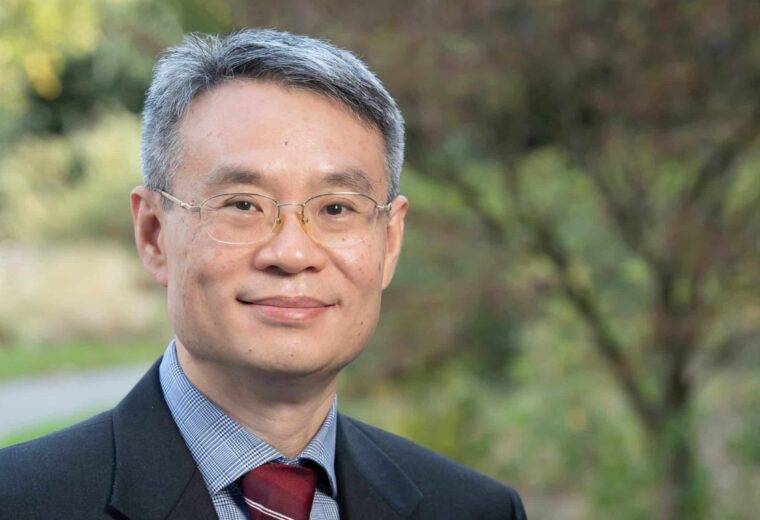
Chen joins a multi-institution team to advance analog neural network accelerators toward large-scale deployment.

Yiran Chen, Stefano Curtarolo, Charles Gersbach, David Mitzi and Junjie Yao were recognized for ranking in the top 1% by citation in their fields.
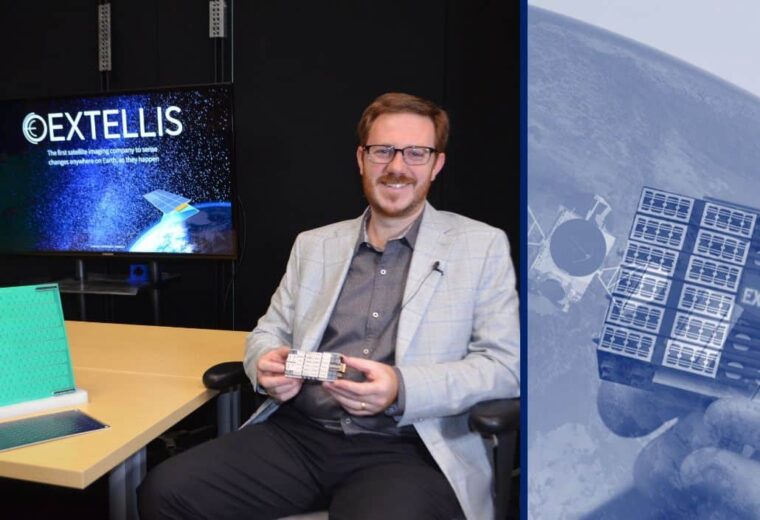
Duke Engineering spinoff company Extellis announced an oversubscribed $6.8 million round of seed funding.
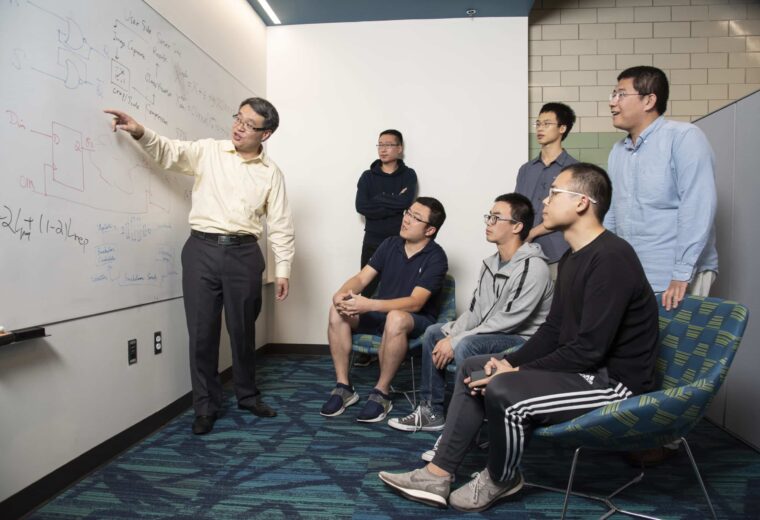
Through pioneering neuromorphic computing research, Yiran Chen is developing brain-inspired hardware neurons that could lead to faster, smarter and more energy‑efficient AI.