

Duke’s Semiconductor Game Changers: Tania Roy
Tania Roy studies novel semiconductor materials and devices to advance energy-efficient computing and edge AI.
Tania Roy studies novel semiconductor materials and devices to advance energy-efficient computing and edge AI.
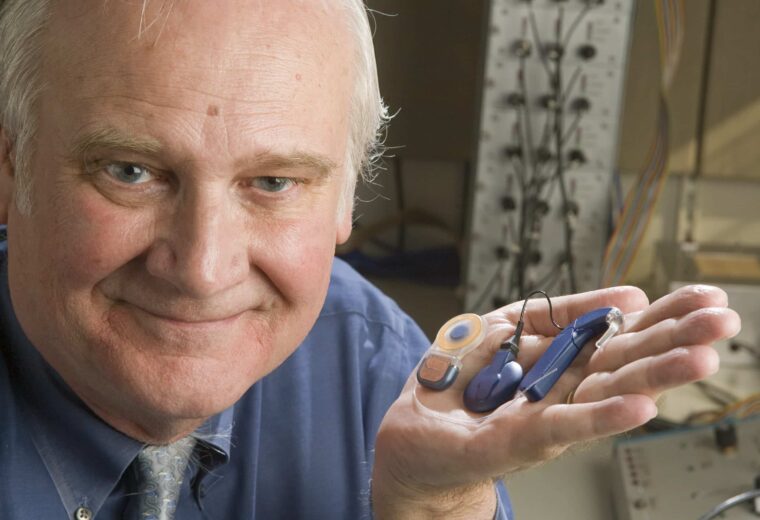
Wilson shares this prize for his contributions to the development of the cochlear implant.
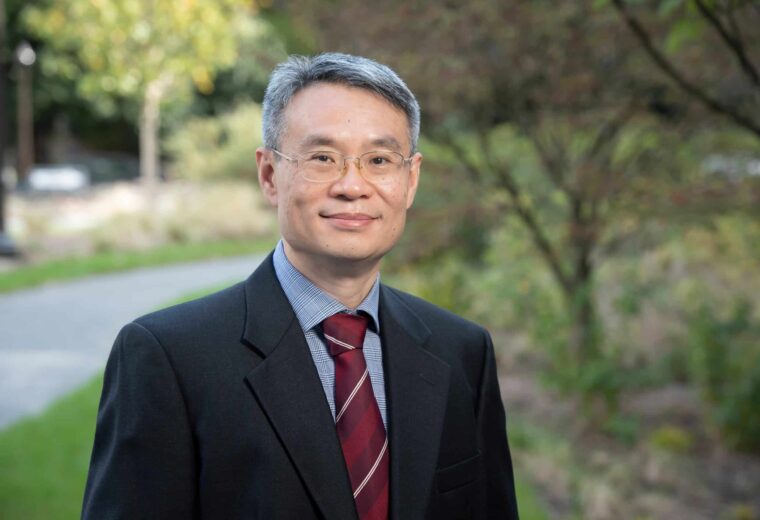
Yiran Chen develops brain-inspired semiconductor hardware to enable faster, greener AI at the edge.

The Pratt School of Engineering received a major gift naming the Pierre R. Lamond Department of Electrical and Computer Engineering.

Neurophos is a startup spun out of ECE Professor David Smith's research.

With advanced computing, semiconductors and AI hardware essential to national competitiveness, a transformative investment positions Duke to lead in computer engineering.

Testing in Chen’s lab at Duke shows an AI model that can identify thousands of images transmitted wirelessly with high accuracy in the blink of an eye.

Duke researchers have shown that large AI model weights can be smartly embedded in the form of radio waves delivered over the air between devices and nearby base stations, opening a path to energy-efficient edge AI without the usual cost in energy, speed or size.

Duke engineers publish new method to use analog radio waves to boost energy-efficient edge AI.
Doug Nowacek dispels the myth that ocean wind farms are a major source of harm to whales and other wildlife.

PhD students Dylan Matthews and Sazzadur Rahman presented amorphous oxide semiconductor research at the IEEE IEDM conference.

Shaundra Daily was recognized for her contributions to computing education, and Nicki Washington was recognized for contributions to broadening participation in computing.