From Quantum Error Correction to Emergent Gravity: Probing Holographic Universes
Crystal Noel co-led the development of a simplified model to understand how the fabric of space and time could emerge from fundamental quantum degrees of freedom.
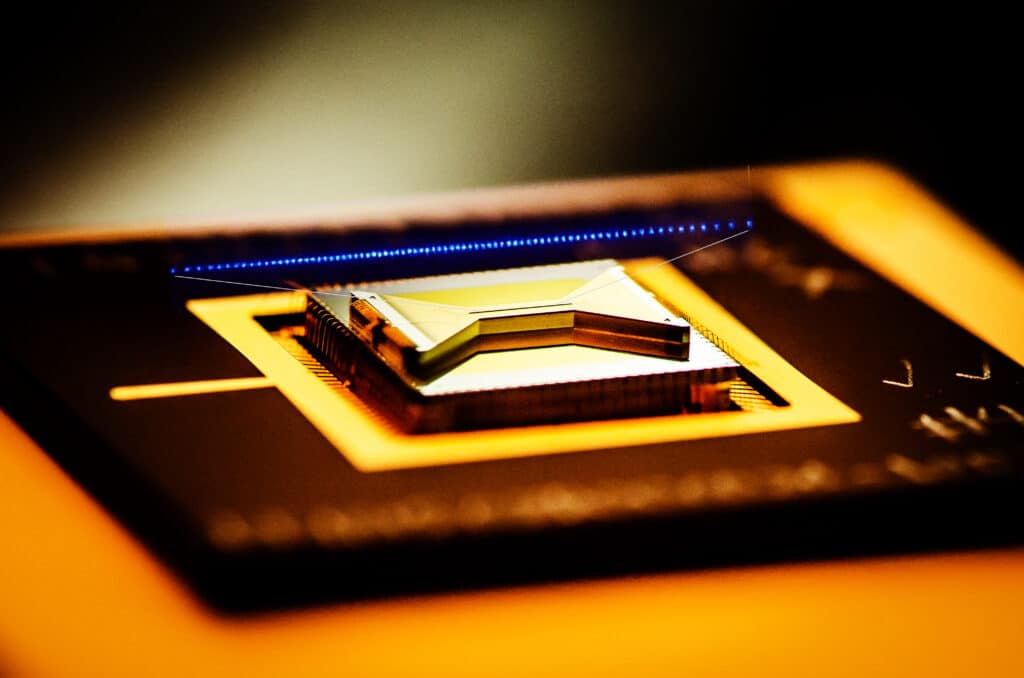
With $80+ million in funding from IARPA, ARO, NSF and DOE to date, Duke ECE’s internationally recognized quantum computing team—part of the Duke Quantum Center—is replacing the bits of traditional computers with trapped ion qubits, which exist in multiple states at once. These powerful new systems have the potential to perform multitudes of computations in quantum superposition, enabling algorithmic shortcuts for blazing-fast computation. The future holds promise for applications in cybersecurity, AI, and modeling complex biological, chemical, pharmacological, environmental and financial systems. Spinoff IonQ has raised $77M in investor funding to date and has built two of the most accurate quantum computers in existence.
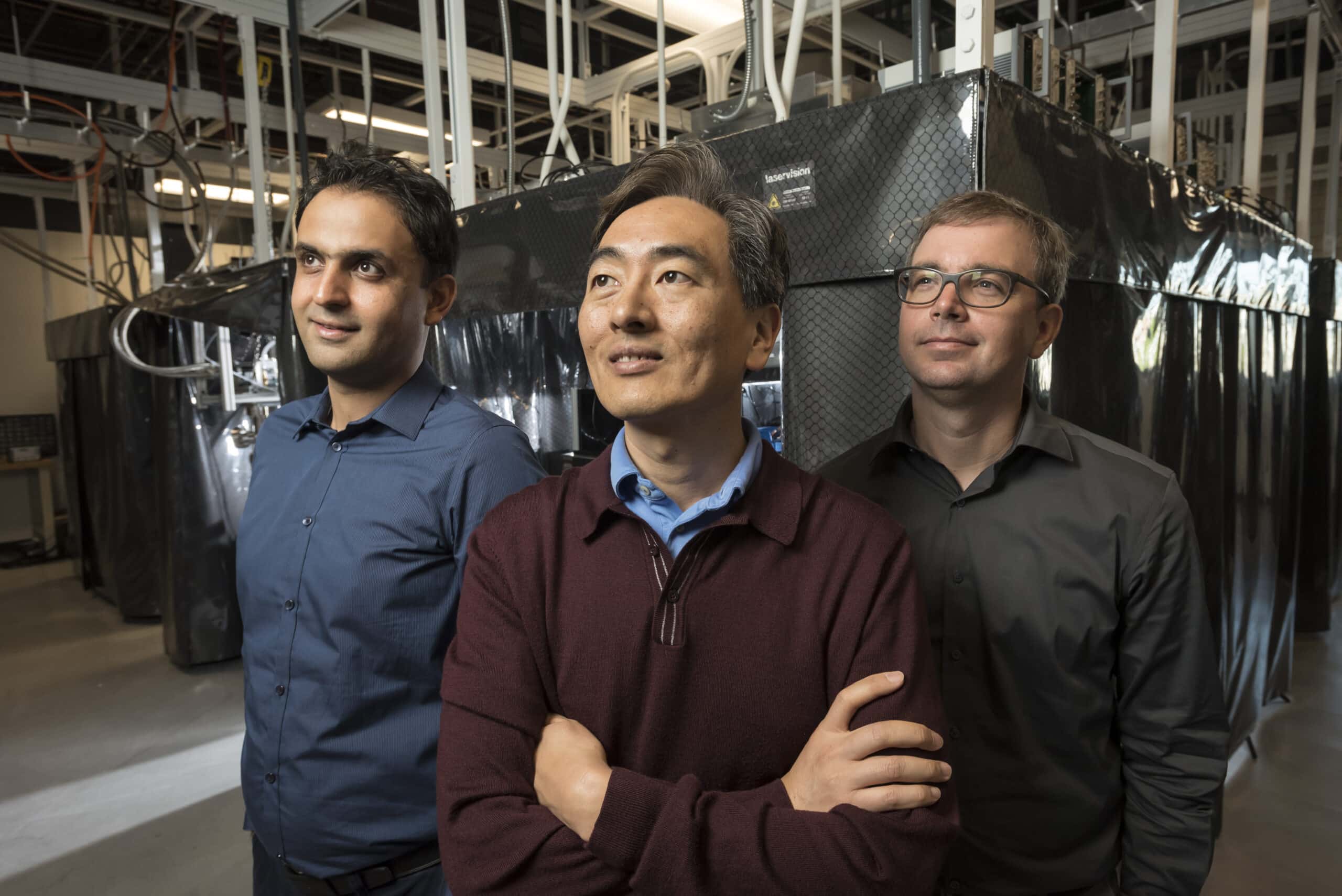
Crystal Noel co-led the development of a simplified model to understand how the fabric of space and time could emerge from fundamental quantum degrees of freedom.

Duke Quantum Center researcher to explore thin-film lithium niobate to deliver light more efficiently in quantum computer systems.

Jungsang Kim receives the Changjo Medal for pioneering work to make trapped-ion quantum computing scalable and commercially viable.

Michael J. Fitzpatrick Distinguished Professor of Engineering

Charles S. Sydnor Distinguished Professor of Computer Science

Schiciano Family Distinguished Professor of Electrical and Computer Engineering

Associate Professor in the Department of Electrical and Computer Engineering

Gilhuly Family Presidential Distinguished Professor

Assistant Professor of Electrical and Computer Engineering

Addy Family Professor of Electrical and Computer Engineering
Explore additional specialty research areas in Duke ECE and throughout the Pratt School of Engineering.