

Tania Roy Wants to Engineer the Hardware for the Next AI Revolution
At the Duke Langford Lecture, Roy outlined her vision for a smarter, greener solution to AI demands.
At the Duke Langford Lecture, Roy outlined her vision for a smarter, greener solution to AI demands.

Duke engineers built an AI optical microscope that analyzes 2D materials as precisely as human experts.

Researchers build an “agentic system” of large language models that can solve complex design problems in a fraction of the time of skilled experts.

Capillary flow printing enables Aaron Franklin and his lab to print features less than a millionth of a meter for thin-film transistors.

Joel Greenberg is taking research conducted in his former lab at Duke and spinning it out into a new type of airport security scanner.
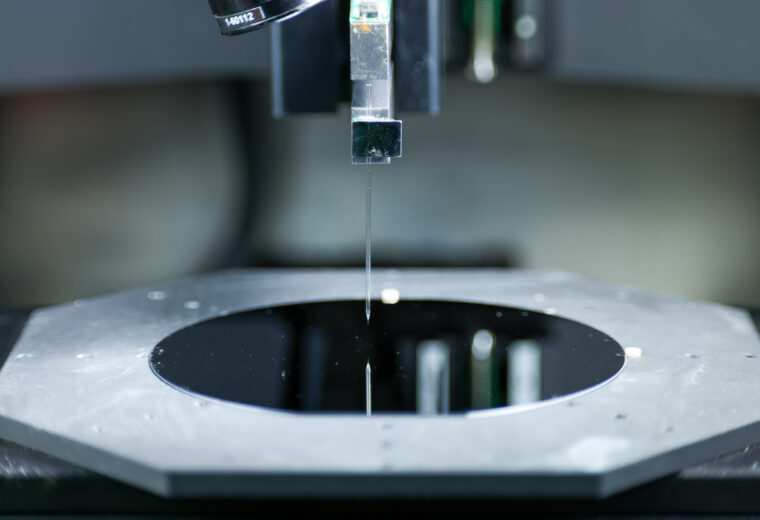
Duke Engineering researchers demonstrate the first fully recyclable, sub-micrometer printed electronics.
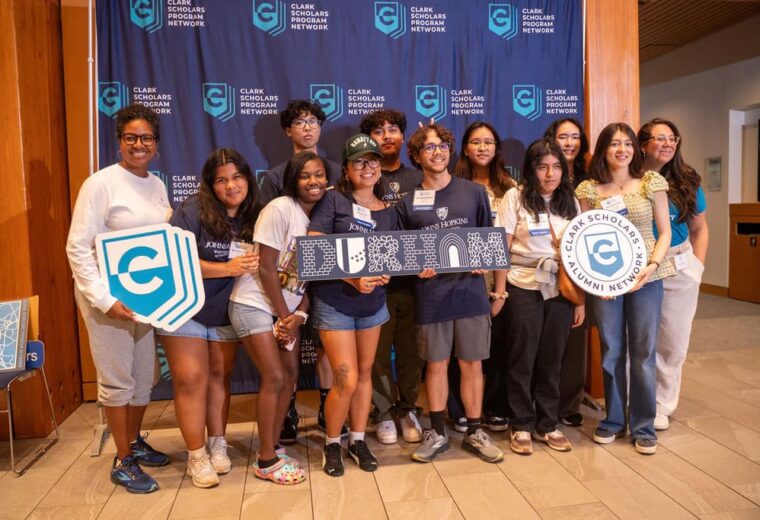
Students tackled community-centered design challenges, engaged in service projects and connected to socially conscious engineering education efforts.

Duke ECE’s Maria Gorlatova earns a DARPA Director’s Fellowship to advance research that makes augmented reality safer for soldiers and everyday users.

Highly competitive national awards will help new and returning graduate students conduct impactful research

Resolv, a spinout of Duke University’s Pratt School of Engineering, closed on $5 million seed funding round to develop metamaterials-based device that could impact the $10 billion building construction and remediation industry.

Metamaterials are materials engineered to bend light in ways nature never intended. From invisibility cloaks to seeing through objects, David R. Smith’s research shows how metamaterials are changing optics, physics, and the future of technology.

New $2.66 million grant from the National Science Foundation will support the construction of a 96-qubit quantum computer to enable future advances in the field.